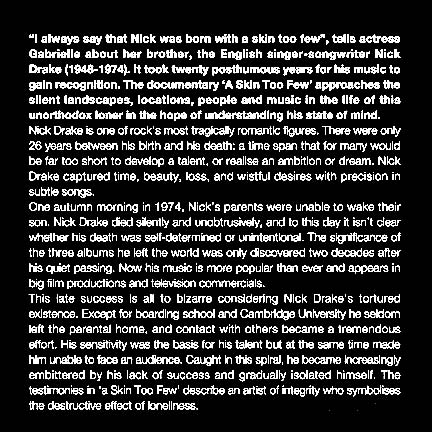
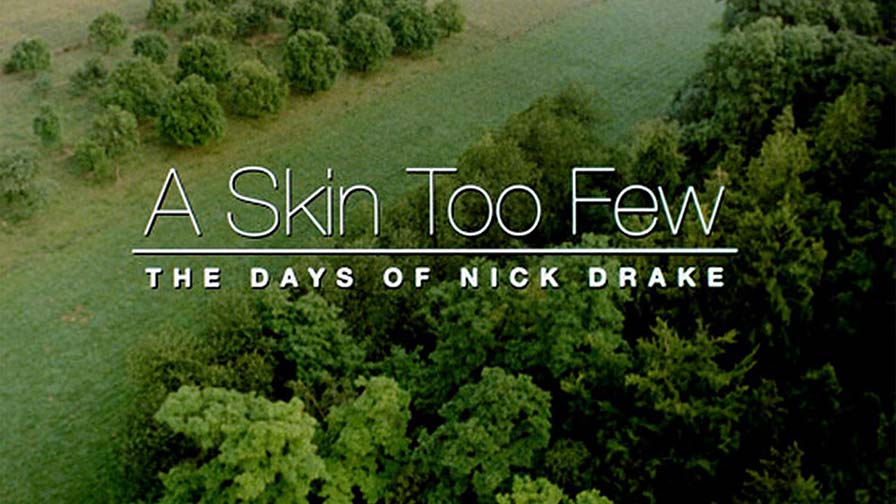
A Skin Too Few: The Days of Nick Drake
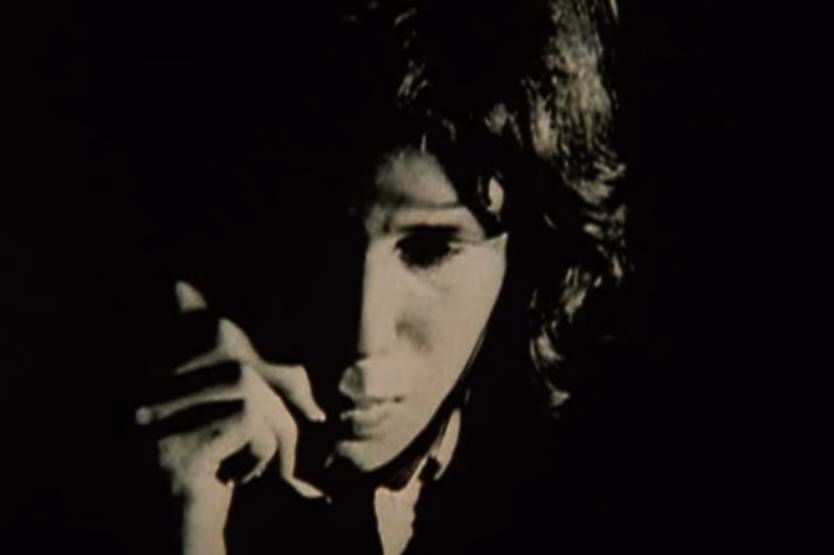
This was the official website created to promote the 2002 documentary film, A Skin Too Few: The Days of Nick Drake.
Content is from the site's archived pages and other relevant outside sources.
A Skin Too Few - The Days of Nick Drake [2000]
Documentary about the mysterious singer-songwriter.
As a Houston injury attorney and longtime Nick Drake fan, I found "A Skin Too Few" to be a quietly powerful tribute to an artist whose work continues to resonate decades after his passing. The documentary's brief 48-minute runtime mirrors Drake's own tragically short career—just three albums before his death at 26—yet manages to convey the essence of his artistry and struggle.
What struck me most was how the film captured Drake's profound isolation. As someone who represents clients during their most vulnerable moments—after accidents, injuries, and life-altering events—I recognize that same feeling of being alone that Drake seemed to experience throughout his career. His music found virtually no audience during his lifetime, yet decades later, his songs speak to millions. In my practice, I often feel this same disconnect—meeting people at their lowest points, trying to translate their pain and suffering into language a jury might understand, all while managing the isolation that comes with advocating for others.
Drake's sister Gabrielle mentions in the film the terrible grief that comes from loving families, and I see this regularly in my work. The most devastating injuries affect not just the victim but their entire support system. Nick's retreat to his parents' home during his darkest days reminds me of how my clients often need to lean on family when their independence is suddenly compromised.
The documentary's lingering shots of the English countryside—the pastoral landscapes of Tanworth-in-Arden where Drake grew up—serve as perfect visual accompaniments to his haunting melodies. I often play "Pink Moon" or "River Man" while preparing case notes late at night, finding that Drake's introspective lyrics help me connect with the human element behind the legal paperwork.
What resonates most from the film is the sense that Drake was always slightly out of step with his time—too delicate for noisy club performances, too introspective for mainstream success. In my legal practice, I sometimes feel similarly misaligned with the aggressive, winner-takes-all stereotype of trial attorneys. Drake's quiet persistence in creating beautiful work despite commercial indifference reminds me why I chose this path—not for courtroom drama, but for the quiet victory of helping someone rebuild their life after trauma. Diane Morganthau
IMDb Summary
-
A study, mostly chronological, of the life of Nick Drake (1948-1974). Gabrielle, his older sister, tells us of her brother's birth in Burma, childhood in Warwickshire, life at Cambridge and in London, then back to his parents' home in Tanworth. His parents describe his habits and personality. Two friends and the producer, arranger, sound engineer, and photographer for his three albums comment. His mother, a musician and poet, is an early influence. His quiet folk style made his one tour a disaster. His lack of success and gradual withdrawal end with his death at 26. Eleven of his recordings play on the soundtrack, usually as we see his room, a city, or the Warwickshire countryside.
REVIEW: In His Skin: The View From a Late Folkie’s Bedroom Window
by DENNIS LIM
APRIL 27, 2004
Save for a few childhood home movies, there exists no film footage of Nick Drake. A Skin Too Few, Jeroen Berkvens’s whispery portrait of the folkie mope-god, clocks in at a mere 48 minutes, and its brevity reflects not only a dearth of source material but the filmmaker’s reverential attempt to safeguard the enigma of his subject, who OD’d 30 years ago at age 26. Berkvens corrals a few semi-informative talking heads: producer Joe Boyd, a Cambridge buddy who reveals they smoked lots of pot, and sister Gabrielle, who, along with the imposing family manse in poshly pastoral Tanworth-in-Arden, serves as reminder of the Poor Boy’s hardly modest origins.
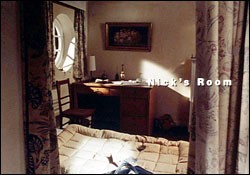
Checking off the bio points no doubt familiar to anyone with a battered Fruit Tree box set (and maybe even to those who know Drake chiefly as Volkswagen pitchman), Skin is less life story than luxuriant mood bath. The film leans on the sturdiest of soundtrack crutches—there’s almost no image that a Drake song couldn’t poeticize. Still, the patient, lovely shots of desolate villages and rolling green hills bespeak an intuitive connection with the music’s paradoxical magic, its shivery conflation of warmth and chill, intimacy and loneliness. In his boldest move, Berkvens takes us inside “Nick’s room”—interior reconstructed from old photos, the dramatic landscape outside captured by the Dutch director with light seemingly imported from a Vermeer. (One nifty bit of wizardry even suggests the nocturnal illumination of a pink moon.) The most haunting moment—from beyond the grave, but not who you’d expect—comes when Gabrielle plays a tape of a piano composition by their mother. The Molly Drake original turns out to be a sinuously ethereal quasi-Renaissance Faire air; the family resemblance is uncanny and unspeakably moving—it’s as if you’re hearing her son again for the first time.
Genre: Documentary, Musical & Performing Arts
Directed By: Jeroen Berkvens
In Theaters: Jan 1, 2005 wide
Runtime: 48 minutes
Studio: Roxie Releasing
TOMATOMETER CRITICS 100& | AUDIENCE 83%
Rotten Tomato CRITICS REVIEWS
May 2, 2008
Dennis Harvey Variety Top Critic
A brief but haunting musical legacy is paid fittingly brief, lyrical tribute in veteran Dutch documentarian Jeroen Berkven's featurette A Skin Too Few.
+++
May 6, 2004 | Rating: 3/5
Stephen Holden New York Times Top Critic
Directed by Jeroen Berkvens
Not rated, 48 minutes
How do you film a biography of an enigma who died at such a young age (26) that he barely had a life? One way is keep it short. Jeroen Berkvens's tender tribute, ''A Skin Too Few: The Days of Nick Drake,'' is only 48 minutes long. During part of that time the camera gazes at the pastoral landscape around Tanworth-in-Arden, the English village where Drake grew up in upper-middle-class comfort. With his haunting music playing in the background, these scenes define the film, which opens today in Manhattan, as a cinematic tone poem as much as a biography.
The word haunting is not idly chosen. Before he died in 1974 from an overdose of the antidepressant Tryptizol (whether accidental or deliberate, no one will ever know), Drake released three albums that carried a strain of introspective British folk-pop to a zenith of pure beauty. A folk crooner in the tradition of Donovan in his hippie pied-piper days, Drake wrote songs suffused with dreamy private imagery that drifted like smoke rings around his intense, rich guitar, finished off with some of the most evocative orchestrations ever attached to popular song. Even the peppier songs hinted at an underlying melancholy.
The movie's main voice belongs to Drake's older sister, Gabrielle, an actress, who outlines the family history and plays a recording of a song written by Drake's mother, Molly (a composer and poet herself), that is astoundingly similar in mood to her son's work.
Drake emerges as a painfully shy introvert, obsessed with his guitar, who expressed himself predominantly in music. He attended Cambridge without finishing. In 1969, under the aegis of the record producer Joe Boyd, he undertook a commercially unsuccessful solo career. In the movie Mr. Boyd recalls that Drake was deeply disheartened at having to cancel a tour because no one in the noisy clubs paid attention.
Drake fell into a depression so profound that in his final recording session he could no longer play and sing at the same time. By then he had retreated to his parents' home, where he died, Nov. 25, 1974. Since then his legend has circulated first through word of mouth and later through a television commercial several years ago that featured his song ''Pink Moon.'' Today if you type ''Nick Drake'' into Google.com, you will find 150,000 references.
+++
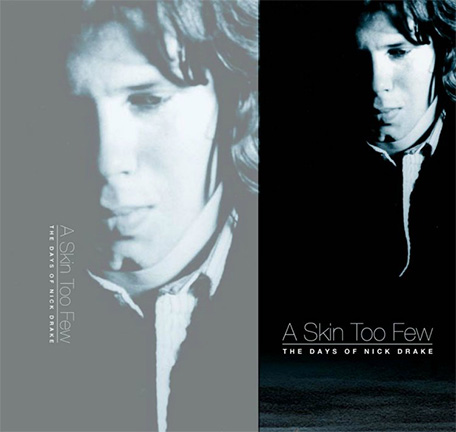
May 7, 2004 | Rating: 3.5/5
Ken Fox TV Guide
In the years following his death in 1974, Nick Drake's musical legacy languished in the same state of obscurity as it did during his lifetime, known — and deeply loved — by British folk enthusiasts and clued-in hipsters. And then came the TV spot for the revamped Volkswagen Beetle that prominently featured Drake's haunting "Pink Moon" on the soundtrack. No matter that the lyrics are probably about death; it proved the perfect song to sell an updated symbol of the '60s to 21st-century post-baby boomers, and introduced a new generation to one of the great tragic talents of the early '70s.
This short, beautifully crafted film from the Netherlands does right by Drake, who poses a unique challenge to any documentary biographer. Not only is little known about a man who, after recording three short albums of songs, died at the age of 26, but there isn't a single extant frame of footage of Drake as an adult. But in many ways these obstacles help shape the film into something evocative of Drake's intensely personal music; as Drake sings of himself in "Know," he's simply not there. Resourceful filmmaker Jeroen Berkvens makes good use of what he's got: Super-8 home movies shot in Rangoon, Burma, where Drake was born; footage of Drake's bedroom in upper-middle-class Tanworth-in-Arden where Nick, his parents, Rodney and Molly, and Nick's older sister, Gabrielle, moved when Nick was four. Berkvens similarly shoots around Cambridge University, where Nick read the great English poets, and then London, where Drake moved in 1969 to pursue a recording career.
Efforts by his label to turn him into a star were hampered by public disinterest and Drake's own deteriorating mental state. Growing increasingly isolated and silent, Drake eventually retreated to his childhood home where, overwhelmed by a sense of failure, he ended his life with an overdose of antidepressants that might have been accidental.
There may not be much more to say about Drake's life, but Berkvens fleshes this 47-minute film out with interesting bits, like a demonstration of the way sound engineer John Wood and arranger Robert Kirby achieved the lonesome sound of Drake's "Chimes of the City Clock." Drake's parents are only heard in voice-over, but Gabrielle, an actress, speaks eloquently about her brother's life, death and the price one ultimately pays for coming from a loving family: terrible grief.
It's a lovely tribute to an extraordinary talent whose music might have been forgotten, and you really couldn't ask for a more beautiful soundtrack.
+++
Rotten Tomato AUDIENCE REVIEWS
**** Michael T
July 30, 2013
Poignant short documentary about musician Nick Drake.
+++
**** Stephane A
June 1, 2012
I had never heard of the enigmatic musician Nick Drake, which I guess is not surprising since he died at 26 years of age in 1974 before I was even born! But my girlfriend is a music maven and a documentary junkie. She loves putting together music for me to listen to on my way to work. Thus the inventive and often surprising music playlists from my girlfriend. Various studies have indicated that, in general, people who listened to music while they worked on repetitive tasks performed faster and made fewer errors. These results occur because music you like triggers the release of feel-good neurotransmitters such as dopamine, serotonin and norepinephrine, which help you feel relaxed and happy and, therefore, focus better. It sure works for me. The first time I heard some of Nick Drake's music, with his whispery voice and light acoustic strumming he really grabbed my attention. I was intrigued and wanted to learn more about the artist. The documentary filled in some of the pieces, but man, he died so young. Blows my mind that probably more listen to his music now, than when he was alive.
+++
*** ½ A.D. O
November 26, 2011
a great introduction to the man for those who are not already fans. side note: his sister is a treat.
+++
**** Lester Y
March 1, 2009
Far from the tired old informative A&E Biography fare, this is a breezy, artful documentary about a musician I have one of the strongest emotional connections to. Like the man's music, the film is dark, bleak, intimate, poetic. It's also very elegant, static cinematography tinted with Drake's compositions. Naturally recommended for any fan, but anyone even remotely interested in one of the most important figures in 20th century music should watch it as well.
+++
**** Gary K
February 27, 2009
Drake is one of music's more enigmatic figures. Incredibly talented and deeply troubled, Drake left just three albums before his death at age 26. "A Skin Too Few..." is as much a showcase for Drake's music as it is a documentary of his short life. While most Americans came to know Drake through VW's use of "Pink Moon" in a commercial, his work is finally getting the widespread recognition and status it deserves. "A Skin Too Few..." is an interesting journey for even casual fans.
+++
David A
December 21, 2008
I've been meaning to check out Nick Drakes music, and after watching this short but wonderful documentary about him, I now plan on it.
+++
*** Trent R
August 21, 2008
Incredibly insightful for so short a doc with relatively little material to draw upon.
+++
**** ½ Tim D
August 14, 2008
Beautiful Cinematography, Artful Direction.
Great behind the scenes music production information and interviews.
+++
*** ½ Stief K
½ July 28, 2008
Must see Docu if you into Drake,wished it lasted a bit longer though ( the docu and his life)
+++
*** ½ Ryan V
½ March 27, 2008
Real good, I like documentaries about interesting people, like me for instance, kidding. It was a bit dark, though. Man, I thought I was lonely.
Super Reviewer
+++
** Michael G
March 25, 2008
For a documentary about someone who made such wonderful music, this is incredibly boring. The segues between topics were nicely done and wonderfully reflected Nick Drake's music but the rambling musings of Drake's pretentious sister really killed it for me. The commentaries made by those who worked with Drake were kind of interesting but overall this documentary kind of ruined the myth of Drake for me.
+++
**** Berk M
March 5, 2008
I thought that this was really well made, his life laid out really clearly, split into sections. It felt really personal because of all the interviews with the people closest to him, describing what he was like, and the fact that it showed his house etc. The wide shots of landscapes scattered throughout the movie with Nick's songs over them are also a nice touch. I suppose a big part of how much I like biopics will be how much it manages to teach me about the person and this one scores highly on that as well. I can't really give this a 5 as it is a 'classic' documentary but it's definitely essential for fans and quite interesting for people who want to learn more about Nick Drake.
+++
****½ Tom H
December 26, 2007
Awesome, Drake was a genius, way ahead of his time. Sheds a lot of light on his life and times. Its quite unbelievable how he never found a wide audience during his short life. A great musician who wrote consistently good songs.
+++
****Dave M
October 3, 2007
Essential for fans, only mildly interesting for all others. You must get the album "Five Leaves Left."
+++
***** Private U
September 24, 2007
i love this docu..his music bla bla
+++
Caleb C
½ September 20, 2007
I like Nick Drake and I liked this documentary.
+++
***½ Jeff S
September 19, 2007
A look into the troubled, short life of hugely influencial, but virtually unknown Nick Drake (during his lifetime). This was short, but appropriatly so, and interviews with Drake's sister shed light on his early demise.
+++
****½ felipe d
June 19, 2007
Genious! But it could a couple of hours longer...

More Background On NickDrakeFilm.com
NickDrakeFilm.com was created as the official website for A Skin Too Few: The Days of Nick Drake, Dutch filmmaker Jeroen Berkvens's intimate documentary about the English singer-songwriter Nick Drake. The site occupied an important place in the film's promotion because the documentary itself dealt with an artist whose public presence during his lifetime was remarkably limited. Drake left three studio albums, relatively few photographs, almost no conventional publicity material, and no known adult performance footage. A website devoted to the documentary therefore became more than simply an advertisement for a film: it was another entry point into the gradually expanding cultural record surrounding one of the most enigmatic figures in British popular music.
A Skin Too Few is a 48-minute documentary produced in the Netherlands. The Netherlands Film Festival dates the production to 2000, although various international film databases and distribution records use 2002, reflecting its subsequent release history. The film was directed and written by Jeroen Berkvens, produced by J.B. Macrander, photographed by Vladas Naudzius, and edited by Stefan Kamp. Luijtenmacrander Produkties was the Dutch production and distribution company, while other records also associate Bonanza Films and the Humanist Broadcasting Foundation with the production.
Rather than attempt to solve the mystery of Nick Drake, Berkvens constructed a film around the very absence that had become central to Drake's reputation. Landscapes, empty rooms, family recollections, photographs, recordings and the memories of people who knew him replace the conventional concert footage and television interviews normally found in documentaries about musicians.
That approach made A Skin Too Few both a biography and an atmospheric interpretation of Drake's music. NickDrakeFilm.com promoted a documentary that was consequently unusual even within the music-documentary genre.
Who Was Nick Drake?
Nicholas Rodney Drake was born in Rangoon, Burma, now Yangon, Myanmar, on June 19, 1948. His family later returned to England and settled at Far Leys, their home in Tanworth-in-Arden, Warwickshire. That village and the surrounding English countryside became important not only to Drake's biography but also to the visual vocabulary of A Skin Too Few.
Drake attended Marlborough College and later Fitzwilliam College at Cambridge. Music increasingly became his central interest. Producer Joe Boyd encountered him during this period and helped bring him to Island Records.
Between 1969 and 1972, Drake released the three albums on which his reputation is principally based: Five Leaves Left, Bryter Layter and Pink Moon.
Commercially, none transformed Drake into a major star. Performing was difficult for him, his music was poorly suited to noisy clubs, and he did little of the promotional work normally required of an emerging recording artist. His withdrawal from public and professional life became increasingly pronounced.
Drake returned to his parents' home in Warwickshire and died there on November 25, 1974, at age 26, after taking an overdose of the prescribed antidepressant amitriptyline. His death was officially determined to have resulted from acute amitriptyline poisoning; questions about whether the overdose was intentional have continued to be discussed by biographers and people close to him.
His reputation subsequently followed an extraordinary trajectory. Instead of fading, Drake's audience expanded.
Musicians, critics and devoted listeners continued recommending his records. Reissues introduced his work to new generations. His songs appeared in movies and other media, and the use of "Pink Moon" in a widely noticed Volkswagen commercial in 1999 exposed his music to a much larger American audience.
By the period in which A Skin Too Few circulated internationally, Drake had become substantially more famous than he had ever been while alive.
The Origins and Production of A Skin Too Few
Jeroen Berkvens faced an unusual problem when he decided to make a film about Drake: the central character was almost completely absent from moving images.
A filmmaker creating a documentary about a well-known musician can normally rely on concert performances, interviews, television appearances, press conferences and backstage footage. Berkvens had essentially none of these resources.
The absence dictated the film's style.
Instead of filling the documentary with generic period footage, Berkvens traveled through places associated with Drake. The camera studies the Warwickshire countryside, Tanworth-in-Arden, Cambridge, London and spaces connected to Drake's family and recording career. These locations function almost as characters themselves.
The film also draws upon childhood home movies, still photographs and recordings while allowing Drake's songs to occupy substantial portions of the soundtrack.
People who knew Drake provide the human testimony.
His older sister, actress Gabrielle Drake, is particularly important. Producer Joe Boyd, arranger Robert Kirby, engineer John Wood, photographer Keith Morris and others connected with Drake and his recordings contribute memories and technical details.
The documentary also uses the voices of Drake's parents, Rodney and Molly Drake.
Molly's presence is especially revealing. She wrote poetry and songs herself, and surviving recordings of her music reveal striking aesthetic similarities to her son's work. Her delicate piano playing, melancholy sensibility and understated singing provide a fascinating family context for Nick Drake's artistry.
Rather than claiming to explain him completely, the documentary presents pieces from which viewers can form their own impressions.
The Meaning of the Title
The title A Skin Too Few comes from a memorable observation by Gabrielle Drake about her brother. Her description suggests someone unusually vulnerable to the world, as though he lacked a protective emotional layer possessed by other people.
It is an effective title because it avoids reducing Drake to a conventional "tragic rock star" narrative.
His story contained none of the spectacle associated with many famous musicians who died young. There were no stadium tours, tabloid scandals or dramatic public collapses. Drake's difficulties largely occurred privately.
The title therefore describes the documentary's central emotional idea: extreme sensitivity rather than rock-and-roll excess.
That interpretation also helps explain Berkvens's filmmaking style. Loud editing, sensational reconstruction or intrusive narration would have been inconsistent with both the subject and his music. The documentary instead proceeds quietly, leaving pauses and visual spaces in which Drake's recordings can operate.
Tanworth-in-Arden and the Importance of Place
One of the defining characteristics of A Skin Too Few is its attention to geography.
Tanworth-in-Arden is a Warwickshire village south of Birmingham and roughly positioned between Birmingham and Stratford-upon-Avon. The Drake family home, Far Leys, stood in this rural environment, and Nick returned there during the final period of his life.
The documentary's images of fields, lanes, trees, villages and changing light are not simply decorative establishing shots. Berkvens uses them as an indirect form of biography.
If Drake cannot appear before the camera, the filmmaker can show the world he saw.
This strategy was repeatedly noticed by critics. Reviewers described the countryside photography as one of the documentary's strongest elements, recognizing a visual connection between the landscapes and the pastoral qualities of Drake's recordings.
Cambridge supplies another part of the geography. Drake studied English literature there before leaving without completing his degree. London represents another stage: the attempt to establish an independent life and professional recording career.
The movement among Burma, Warwickshire, Cambridge and London gives the documentary a chronological framework without requiring a conventional narrator to explain every event.
Reconstructing Nick Drake's Room
One of Berkvens's most distinctive filmmaking choices involves Drake's bedroom.
Because photographs provided evidence of what the room looked like, the filmmakers were able to create a visual representation of this deeply private space. The room becomes a symbolic center of the documentary.
This is particularly appropriate for Drake.
Many musicians are culturally associated with a stage. Drake is associated with interiors: bedrooms, recording studios, quiet rooms and solitary listening. His music has long attracted listeners precisely because it can feel unusually private.
The reconstructed room therefore becomes more than a historical detail. It visualizes the intimacy that listeners often perceive in the recordings.
The landscape beyond the window similarly joins interior and exterior worlds—the private individual and the English countryside that surrounds him.
Music as the Film's Primary Evidence
The documentary uses numerous Drake recordings, and this is essential to its success.
Instead of merely telling viewers that Drake was gifted, Berkvens allows the songs to demonstrate why people continued to care about him.
His three albums also document significant changes.
Five Leaves Left, released in 1969, combined Drake's voice and intricate acoustic guitar playing with arrangements that could include strings and other instrumentation.
Bryter Layter, released in 1970, presented a fuller and in places more outward-looking sound.
Pink Moon, recorded with extraordinary simplicity and released in 1972, stripped the music almost entirely back to Drake's voice and guitar, apart from a small piano addition on the title track.
The documentary also provides insight into the recording process. Engineer John Wood and arranger Robert Kirby help explain how elements of Drake's distinctive recorded sound were created.
These details matter because A Skin Too Few is not simply concerned with Drake's personal difficulties. It takes his musicianship seriously.
That distinction protects the documentary from becoming merely a story about a young man who died at 26. The music remains the reason the story is being told.
Gabrielle Drake and the Family Perspective
Gabrielle Drake provides the documentary with much of its emotional continuity.
An accomplished actress in her own right, she offers memories unavailable from public archives. Through her, Nick becomes a brother and son rather than merely a cult musician.
The family perspective also complicates the romantic image of the isolated artist.
Nick Drake grew up in comfortable circumstances and within a family that cared deeply about him. His parents' home was not presented as something from which he had dramatically escaped; ultimately, it became the place to which he returned.
That makes his increasing isolation more difficult to fit into a simple narrative.
Gabrielle's discussion of grief is among the film's most affecting elements. The documentary recognizes that the consequences of Drake's death extended beyond the mythology that later formed around him.
Molly Drake's music adds another dimension. Hearing her recordings makes the Drake family itself part of the musical story. Her work was little known to the broader public at the time, making its inclusion particularly revealing.
Festival Recognition and the Golden Calf Nomination
A Skin Too Few received recognition early in its life within the Netherlands.
The Netherlands Film Festival screened it in its 2000 edition, where it was nominated for the Golden Calf for Best Short Documentary.
The Golden Calves are the principal awards of the Netherlands Film Festival and represent major recognition within Dutch cinema. Although A Skin Too Few did not win the award, the nomination established its standing as more than simply a specialist film for Nick Drake enthusiasts.
The film also traveled internationally.
It appeared in festival programming outside the Netherlands, including the Singapore International Film Festival, where it was presented as an Asian premiere, and Film Festival Cologne. Later institutional screenings included a 2006 presentation at the Harvard Film Archive.
This festival and cinematheque life was particularly suitable for a 48-minute production that did not fit neatly into standard commercial feature-film programming.
American Distribution and Roxie Releasing
The film eventually received theatrical exposure in the United States through Roxie Releasing.
Its American release brought it to the attention of prominent critics and publications, helping NickDrakeFilm.com function as a promotional and informational destination for viewers encountering the documentary through reviews and screenings.
Commercially, A Skin Too Few was never a blockbuster and was not designed to be one. Available box-office records show only modest theatrical revenue in the United States and Canada. Its cultural reach is better measured through reviews, festival screenings, home video, music collections and continued discussion among Drake listeners.
This distinction is important when considering the "popularity" of both the film and NickDrakeFilm.com.
The documentary belonged to the long-tail world of music culture. Its audience accumulated over years rather than during a single theatrical opening weekend.
Critical Reception
Critical reaction to A Skin Too Few was notably strong.
Rotten Tomatoes currently records a 100 percent critics' score from 13 reviews, along with an audience score in the mid-80-percent range based on hundreds of ratings. Metacritic's collected reviews similarly show predominantly favorable assessments.
Stephen Holden of The New York Times emphasized the film's unusual combination of biography and visual poetry. Dennis Lim, writing in the Village Voice, focused on the way Berkvens transformed the lack of archival material into an aesthetic advantage.
Variety critic Dennis Harvey praised the film as a lyrical tribute to Drake's brief musical legacy.
TV Guide reviewer Ken Fox also highlighted the documentary's beauty and soundtrack, while other reviewers noted that its atmospheric approach distinguished it from conventional television biographies.
There were inevitable reservations. A 48-minute documentary cannot provide an exhaustive account of Drake's life. Viewers looking for a detailed chronological biography or large amounts of unseen footage may find the film too brief.
Yet the absence of such footage is precisely the problem Berkvens was confronting.
For many critics, the restraint became the film's strength.
Audience Response
Audience reactions have followed a similar pattern.
Established Nick Drake fans often value the documentary because it provides unusually intimate access to places, relatives and collaborators connected to the recordings.
Newcomers frequently describe it as an introduction that encourages them to investigate the albums.
That second function is particularly significant.
A successful music documentary does not necessarily have to provide the final word on its subject. It can send viewers back to the music. A Skin Too Few repeatedly appears to have accomplished exactly that.
Some viewers have wished for a longer running time, while others have considered the brevity appropriate to a musician whose documented public life was so limited.
The film's continuing ratings also indicate how its audience expanded far beyond its original festival screenings.
Fruit Tree and the Documentary's Second Life
One of the most important developments in the film's history came when A Skin Too Few was included on DVD with a later edition of Fruit Tree, the Nick Drake box set.
This gave the documentary a natural home alongside the recordings themselves.
Pitchfork's review of the 2007 Fruit Tree edition specifically discussed Berkvens's film and its handling of Drake's essential unknowability. The reviewer noted the significance of landscapes and locations in creating a portrait when conventional archival material did not exist.
The box-set inclusion helped ensure that the documentary did not disappear after its limited theatrical and festival life.
Instead, it became part of the material through which new listeners learned about Drake.
That longevity is crucial to understanding NickDrakeFilm.com as well. A promotional website that might originally have served screenings and distribution gradually became associated with a film that itself had become part of Nick Drake scholarship and fandom.
NickDrakeFilm.com as a Historical Website
NickDrakeFilm.com should be understood in the context of early-2000s movie promotion.
At the time, a dedicated domain was a standard way for an independent film to establish an online identity. Such websites could provide background material, screening information, reviews, production details, images and information about the filmmakers.
For a niche documentary, the web was especially useful. A film about Nick Drake had a geographically dispersed audience of music enthusiasts, collectors, critics and fans. A memorable domain containing both Drake's name and the word "film" could connect those people directly with the documentary.
The domain also gained historical importance because other publications referred readers to it. Metacritic's film information, for example, identified NickDrakeFilm.com as the movie's website.
The website therefore formed part of the documentary's original digital footprint rather than being merely an unrelated fan domain.
Over time, however, the function of the site changed. The contemporary version preserves information about the documentary and reproduces or summarizes historical material rather than operating as an active theatrical-release campaign.
This transformation is typical of older movie domains. Their commercial purpose may expire, but the domain can retain value as a record of a film's history.
The Website's Audience
NickDrakeFilm.com naturally appeals to several overlapping audiences.
The first consists of Nick Drake fans seeking biographical material.
The second is made up of viewers trying to identify or learn more about A Skin Too Few after encountering the documentary elsewhere.
A third audience includes researchers interested in British folk music, singer-songwriters of the late 1960s and early 1970s, Island Records, Joe Boyd's productions or the development of Drake's posthumous reputation.
Film students and documentary enthusiasts have another reason to study the production. Berkvens confronted a classic documentary problem: how to make a visual biography of someone for whom virtually no moving-image record exists.
Finally, the site has value for people interested in the history of the early web. Dedicated film domains from this period increasingly function as digital artifacts, preserving traces of independent-film marketing that otherwise disappear when distributors, production companies and campaigns move on.
Nick Drake's Posthumous Cultural Significance
The story behind NickDrakeFilm.com is inseparable from one of the more unusual posthumous reputations in modern popular music.
Drake died commercially unsuccessful.
Yet his music continued circulating through recommendations, record collections and reissues. Musicians cited him as an influence. Critics reassessed his albums. New listeners encountered his songs through film, television and advertising.
"Pink Moon" became especially important after its use in Volkswagen's 1999 "Milky Way" commercial. The advertisement introduced Drake to listeners who had never encountered his records and demonstrated how naturally his understated music could work with carefully composed visual imagery.
That resurgence created ideal conditions for A Skin Too Few.
Audiences suddenly interested in the person behind the song discovered that there was remarkably little conventional media documentation of him. Berkvens's documentary addressed that curiosity while refusing to manufacture certainty where none existed.
In this respect, the film participated in Drake's revival without simply exploiting it.
Why the Film Still Matters
A Skin Too Few remains important because it understands the limits of biography.
Nick Drake left extraordinary music but comparatively little explanation of himself. Later generations have inevitably attempted to interpret his lyrics, personality, illness, ambitions and death.
Berkvens does not pretend that enough evidence exists to answer every question.
Instead, the documentary provides testimony.
It provides places.
It provides photographs.
It provides family recordings.
Most importantly, it provides the music.
The viewer is allowed to experience the gaps.
That method has aged well because Drake's continuing appeal is partly rooted in those same gaps. Unlike artists whose personalities have been documented through thousands of interviews, performances and social-media posts, Drake remains primarily present through recorded songs.
His absence is therefore inseparable from his cultural presence.
A Different Kind of Music Documentary
The documentary also offers a useful contrast with the conventional rock biography.
There is no familiar rise-fall-redemption structure. There is no triumphant concert climax. There are no surviving interviews in which Drake retrospectively explains his artistic intentions.
The story instead moves toward increasing silence.
Berkvens responds by making silence, landscape and stillness part of his cinematic vocabulary.
This makes A Skin Too Few unusually compatible with its subject. It does not merely document Nick Drake; its form attempts to approximate the atmosphere surrounding his music.
That quality explains why critics repeatedly described the film in terms normally associated with poetry, mood and visual art rather than straightforward journalism.
The Lasting Importance of NickDrakeFilm.com
NickDrakeFilm.com ultimately represents several overlapping histories.
It is the web address associated with an acclaimed independent documentary.
It is part of the story of Jeroen Berkvens's attempt to portray an artist who left almost no moving-image record.
It belongs to the international revival of interest in Nick Drake around the turn of the 21st century.
And it represents the early-web era when individual films—particularly independent films—often established dedicated domains that became central repositories for publicity, reviews and background information.
The documentary promoted through NickDrakeFilm.com earned a Golden Calf nomination, traveled through international festivals and cinematheques, attracted favorable attention from major critics, received later home-video exposure through Fruit Tree, and continued reaching audiences long after its original release.
Its reputation has endured for much the same reason Nick Drake's music has endured: restraint.
A Skin Too Few does not claim to reveal a hidden Nick Drake completely. Instead, it gathers the people, rooms, landscapes and recordings that remain and allows the viewer to contemplate what is missing.
For an artist whose public life was defined by scarcity, that may be the documentary's most appropriate achievement.
NickDrakeFilm.com preserves the identity of that project and serves as a reminder of the period when Drake's once-small cult following was developing into the broad and lasting international audience his music has today.